Why Pipeline Integrity Should Matter to Everyone
Building a Safer, Greener, and More Sustainable Pipeline Future for Nigeria
Introduction
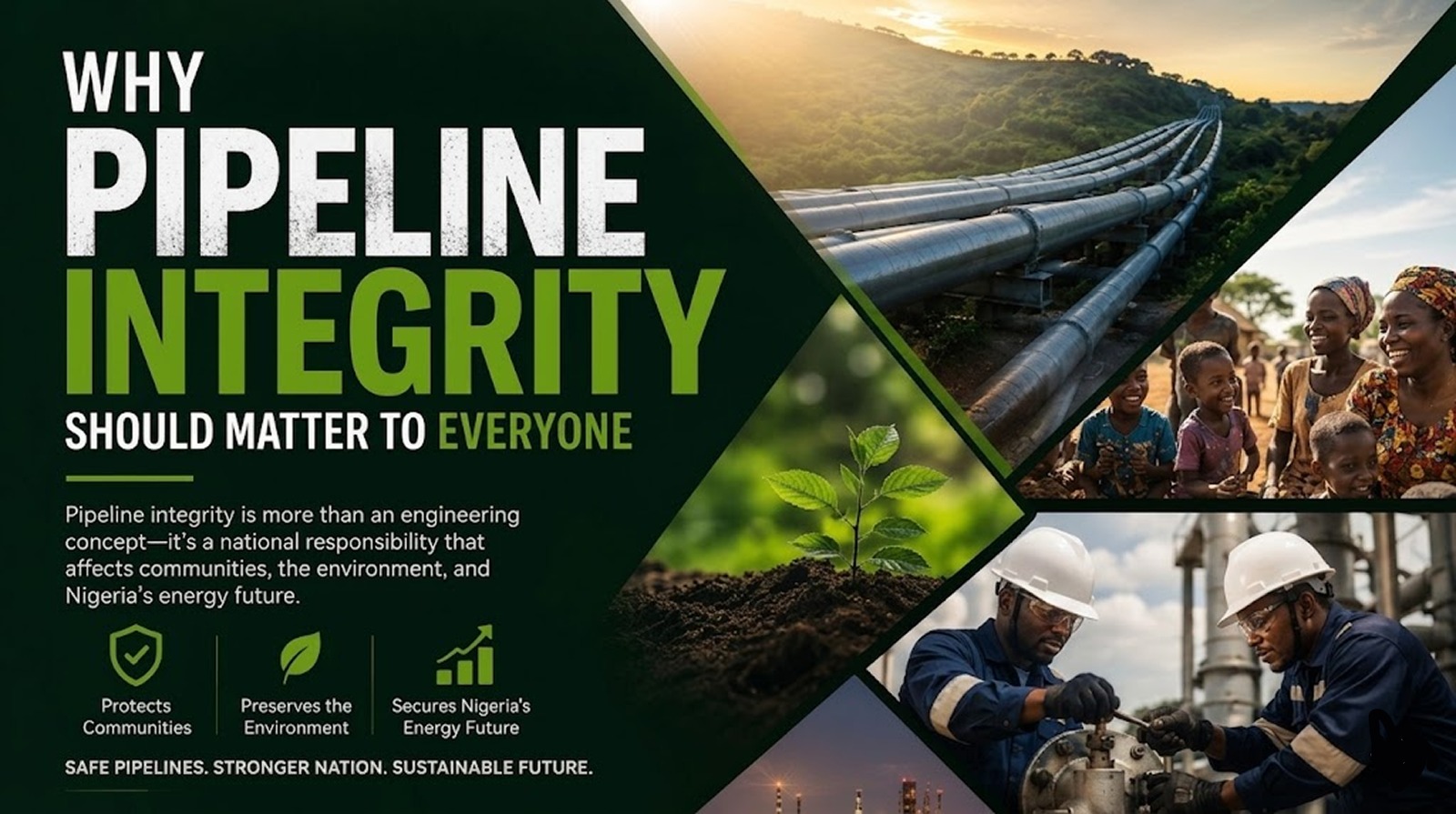
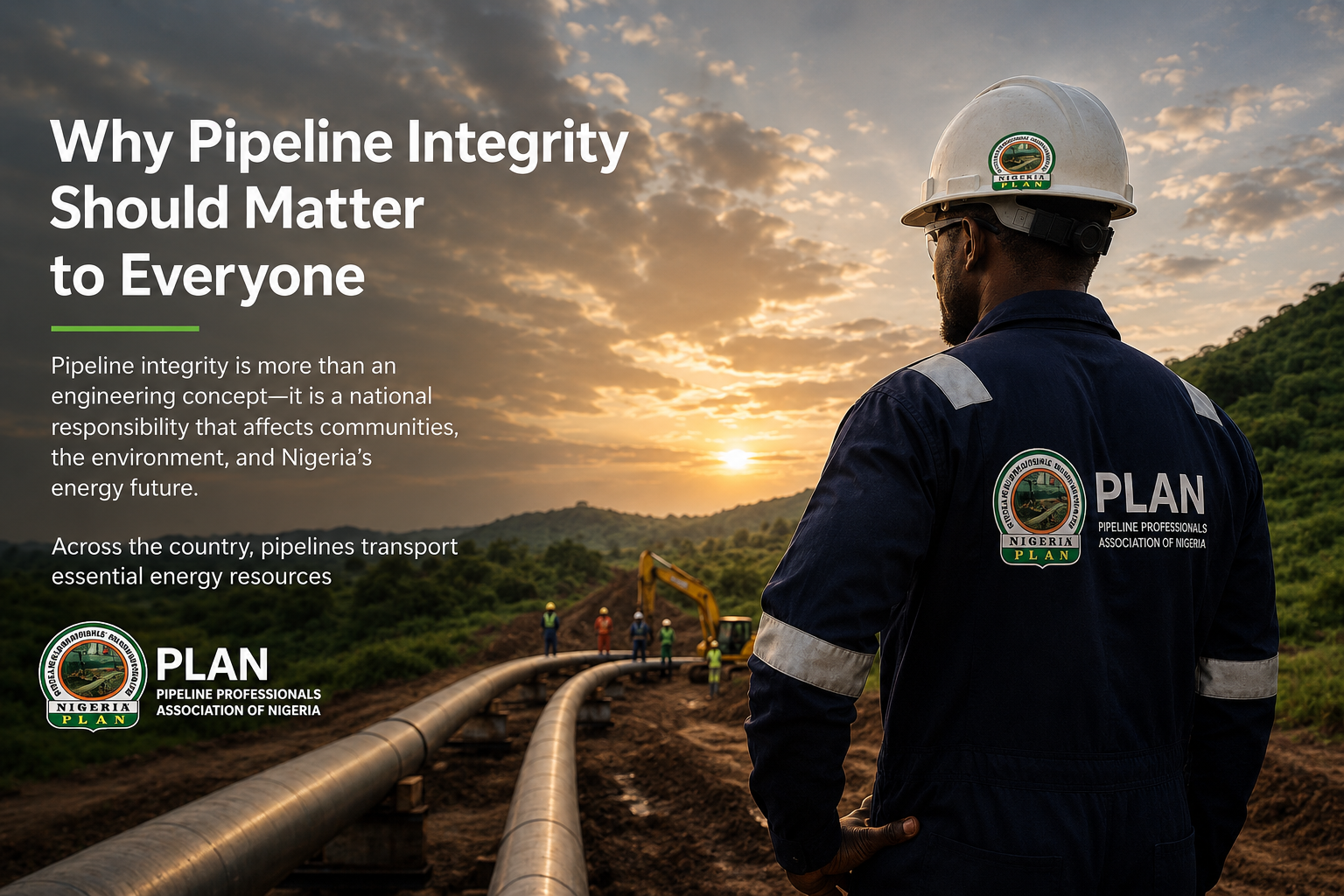
Pipeline integrity is more than an engineering concept—it is a national responsibility that affects communities, the environment, and Nigeria’s energy future. Across the country, pipelines transport essential energy resources, yet failures and sabotage continue to cause environmental and economic damage.
As the Pipeline Professionals Association of Nigeria (PLAN) emphasizes, protecting pipelines means protecting lives, livelihoods, and the long-term sustainability of Nigeria’s energy infrastructure.
What Pipeline Integrity Really Means
Pipeline integrity refers to maintaining pipelines in a safe, reliable, and leak-free condition throughout their lifecycle. This includes proper design, high-quality construction, continuous monitoring, inspection, and timely maintenance.
It also involves preventing vandalism, ensuring regulatory compliance, and adopting modern technologies such as smart inspection tools and real-time monitoring systems.
Why It Affects Everyone
Pipeline failures impact far more than the oil and gas industry. They affect food security, public health, environmental safety, and national energy stability.
Oil spills destroy farmlands and waterways, gas leaks threaten communities, and disruptions in supply lead to fuel shortages and rising energy costs across the country.
The Nigerian Reality
Nigeria continues to record significant losses due to pipeline vandalism, corrosion, and operational inefficiencies. These incidents have led to environmental degradation, revenue loss, and community displacement in key oil-producing regions.
The Nigerian National Petroleum Company (NNPC) and other stakeholders continue to emphasize stronger monitoring, enforcement, and community engagement to reduce these incidents.
Best Practices for Pipeline Protection
Modern pipeline integrity relies on advanced monitoring technologies, including smart inspection tools, drones, IoT sensors, and AI-powered leak detection systems.
Equally important are continuous workforce training, strong regulatory enforcement, community awareness programs, and proactive pipeline replacement strategies for aging infrastructure.
Environmental Responsibility
Pipeline integrity is directly tied to environmental protection. Every leak prevented is land, water, and biodiversity preserved for future generations.
With global focus on sustainability and climate action, responsible pipeline management plays a critical role in reducing pollution and supporting environmental restoration efforts across Nigeria.
Conclusion
Pipeline integrity is not just an engineering requirement—it is a shared national duty. It protects the environment, strengthens energy security, and supports sustainable development.
PLAN continues to advocate for stronger collaboration between government, industry, and communities to ensure safer and more reliable pipeline systems across Nigeria.