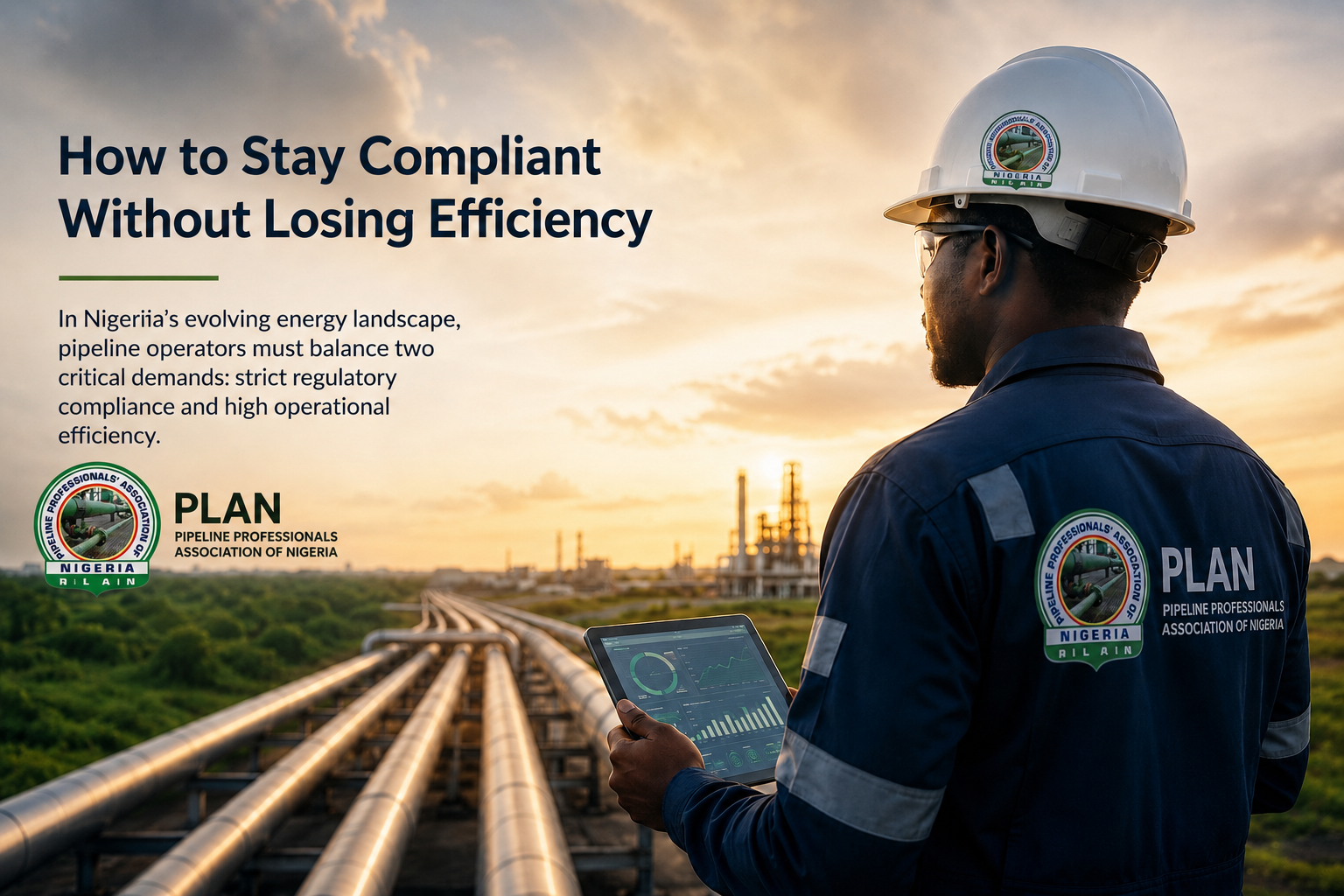
How to Stay Compliant Without Losing Efficiency
Bridging Regulatory Compliance and Operational Performance in Nigeria’s Pipeline Sector
Introduction
In Nigeria’s evolving energy landscape, pipeline operators must balance two critical demands: strict regulatory compliance and high operational efficiency. At the Pipeline Professionals Association of Nigeria (PLAN), this balance is central to building safer, smarter, and more sustainable pipeline systems.
Compliance is no longer just a legal requirement—it is a strategic foundation for energy security, environmental protection, and long-term infrastructure reliability across the Decade of Gas agenda.
Understanding Compliance in Nigeria’s Pipeline Sector
Nigeria’s pipeline operations are guided by regulators such as NMDPRA and NESREA, covering permits, safety standards, environmental protection, and operational accountability. These frameworks ensure pipelines remain safe, efficient, and aligned with national energy goals.
However, compliance extends beyond documentation—it includes engineering integrity, community engagement, and continuous environmental monitoring to prevent failures and reduce operational risk.
Key Industry Challenges
Operators face rising complexity from evolving regulations, aging infrastructure, security threats such as vandalism, and skill gaps in advanced pipeline technologies. These challenges often strain operational efficiency while increasing compliance costs.
Despite these pressures, modern pipeline systems must remain resilient, data-driven, and aligned with national energy transition goals.
Smart Solutions for Efficiency and Compliance
The integration of digital technologies is transforming compliance into a performance advantage. AI-driven predictive maintenance, IoT-based monitoring, and automated reporting systems now enable operators to detect risks early and optimize operations.
Advanced integrity management systems, including smart pigging and risk-based inspection models, are helping organizations reduce downtime, extend asset life, and improve safety performance across pipeline networks.
Economic Impact of Proactive Compliance
When properly implemented, compliance-driven operations significantly reduce maintenance costs, prevent environmental damage, and improve energy supply reliability. These benefits translate directly into stronger investor confidence and improved national energy security.
In the long term, smart compliance systems are not costs—they are investments in operational resilience and sustainable growth.
Conclusion
Staying compliant without losing efficiency requires a shift in mindset—from regulation as an obligation to compliance as a strategic enabler. Through innovation, collaboration, and capacity building, Nigeria’s pipeline sector can achieve safer, more efficient, and more resilient infrastructure.
PLAN continues to champion this transformation through industry engagement, technical development, and advocacy for best practices across the pipeline value chain.